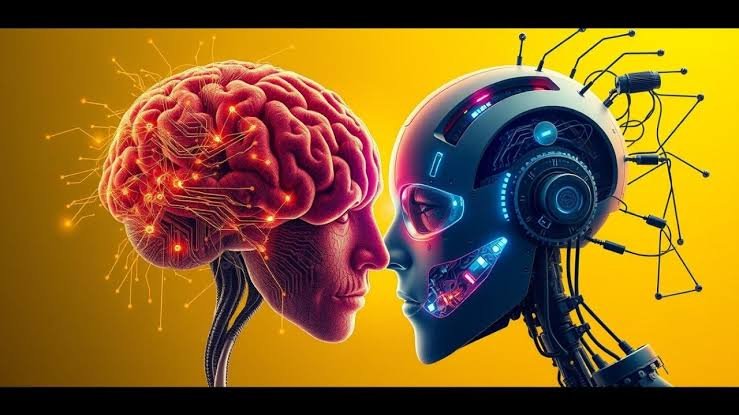
For most of history, intelligence has been scarce.
If you wanted to understand something difficult, you needed the right teacher. If you wanted to build something ambitious, you needed the right team. If you wanted expert advice, you needed money, connections, time, or luck. Most people never had all four.
So a lot of human potential never got the chance to show up. You probably know someone this happened to. Maybe it happened to you.
The kid who decided in seventh grade that she was “just not a math person” and never gave it another chance. The friend whose business idea stayed in a notebook because nobody around him had ever started anything. The person who loved medicine, or physics, or economics, and slowly let it go because the road from curious to competent looked impossibly long.
Most of them had the ability and the drive. What they were missing was access.
That’s starting to change. Intelligence is becoming abundant, and we think that matters in ways the usual conversation about AI mostly misses.
The question we keep coming back to
Most of the talk around AI is about capability. Can it write? Can it code? Can it reason, do research, crack problems that stump experts?
Those are fair questions, and the answers seem to change every few months. The one that keeps us up at night is different. What happens when that kind of intelligence is available to nearly everyone on the planet?
Picture being fourteen and stuck, with a tutor who’ll explain the same idea a fourth way, then a fifth, without ever sighing or making you feel slow. Or getting curious about black holes at 2 AM and being able to keep asking “but why?” long after any textbook would have given up on you. Or having a half-formed idea and actual help turning it into an experiment, and then into something real.
The distance between “I want to understand this” and “I get it” is getting a lot shorter. So is the distance between “I wonder if I could” and “I did.”
Easier isn’t the same as better
There’s another way this could go, and it’s worth being honest about.
When a machine can answer almost any question, it gets easy to stop asking good ones. When it can write for you, there’s less reason to learn how to say what you mean. Take that far enough and you end up with people who are brilliant at prompting machines and a lot worse at understanding the world without them.
That would be an amazing feat of engineering and a lousy deal for the humans involved. We don’t want a future where the machines keep getting smarter and the people using them stop growing.
Technology shouldn’t make people unnecessary. It should make them more capable, and nowhere does that matter more than in education.
A calculator gives you an answer. A great teacher changes the way you think. AI can be either one, and which one it becomes depends on what we choose to build.
Learning that fits the learner
Schools were built around limits nobody could get around: one teacher, thirty students, one textbook, one pace, one big exam at the end. If you were quick, you were bored. If you were slower, you were lost. And if you missed one key idea in week three, you spent the rest of the year building on sand.
None of that was anyone’s fault. Personal attention was expensive, so the whole system was designed to ration it.
AI changes that math. A student who needs a diagram can get one, and a student who needs three worked examples instead of one can have them. Someone with a shaky foundation can go back and fix it without having to admit it in front of thirty classmates. Someone who picks things up fast can keep going, and someone who needs more time can take it without feeling like they’re holding everyone up.
Two people learning the same subject no longer have to take the same path through it. That’s a bigger deal than it sounds, because it changes who gets to believe they can learn hard things.
The best tutor makes itself less necessary
There will always be pressure to make AI spit out answers faster. We think the bigger opportunity is helping you understand something well enough that tomorrow you can take on a harder problem by yourself.
The moments that matter in learning are usually small. One missing idea falls into place and suddenly the whole chapter makes sense. “I don’t get it” turns into “wait, why does that happen?” Stack up enough of those moments and you start asking better questions on your own, and making things with what you know instead of just collecting it.
A good tutor should make you less dependent on it over time, not more.
In practice that looks different from one moment to the next. It might be a clear explanation, a question thrown back at you, or an example that lets you spot the pattern yourself. Now and then it means holding back and letting you struggle for a bit, because that struggle is where a lot of the real learning happens.
Answers were always the easy part. What matters is what you can still do after you close the tab.
What stays scarce
A world full of capable AI has a strange side effect. Answers get cheap. So does content, and increasingly, so does code. Information is practically unlimited.
Your time isn’t, though, and neither is your attention. You still get the same twenty-four hours a day, and what you choose to spend them on matters more than it ever has.
When intelligence is scarce, the bottleneck is knowing how to do something. When it’s abundant, the bottleneck is deciding what’s worth doing in the first place. That puts a premium on things no model can hand you: curiosity, taste, judgment, and the nerve to go after something hard.
It’s easy to assume AI makes the human part matter less. If anything, it becomes the whole point.
Eight billion people, eight billion directions
No company can predict what people will do with this, us included. Honestly, that’s the most exciting part.
Somewhere, a kid will finally get calculus. Somebody will write their first program at fifteen, or at fifty. A curious student will go deep enough into biology to end up working on a new treatment, and a shop owner will learn just enough accounting to figure out where the money keeps disappearing to.
Plenty of people will discover that the subject they swore they hated was just never explained to them properly. And someone in a town nobody in Silicon Valley has heard of will start a company from their bedroom.
Most of it won’t look like anything we’d think to put on a list. There has never been a time when billions of people had an endlessly patient thinking partner within reach. Nobody knows what comes out of that. We’re building Conch partly because we want to find out.
Why we’re building Conch
We think of Conch as a learning engine more than an answer engine: something that stretches what you’re able to think about and leaves the thinking itself to you.
We want Conch to meet you at the edge of what you already know and help you take one step past it. Then another, and another.
Keep going long enough and things that once looked impossible start to make sense. Things you couldn’t build become things you can. The project you were too intimidated to start becomes one you at least know how to begin.
We also believe help like this shouldn’t be reserved for research labs, governments, big companies, or people who already had every advantage. Technology this powerful should be able to teach anyone who shows up curious.
Because somewhere right now, someone is sitting on a question that could change the direction of their life. Or an idea they don’t know how to build yet. Or a subject they’ve quietly decided is beyond them, when it isn’t. They shouldn’t need perfect circumstances to get started.
Curiosity should be enough. We’ll help with the rest.
Leave a Reply