
You probably do not need to study more. You may simply need to give your brain a better reason to remember what you study. If you have been searching for how to remember what you study, the answer is not necessarily another late-night revision session or another round of rereading. It begins with understanding how memory responds to the way you learn, retrieve, revisit, and use information.
I am sure you know the situation. Five books are open on your desk, twenty tabs are running on your laptop, sticky notes have quietly occupied half the table, and every chapter seems to be reminding you that tomorrow’s exam is getting closer whether you are ready or not. You have been sitting there for hours, the coffee mugs are somehow multiplying, and from the outside it certainly looks as though some very serious studying is taking place.
Naturally, your ambition grows in direct proportion to how little time is left. Tonight, apparently, you are going to finish the syllabus, revise the references, understand everything you ignored for the previous three weeks, and perhaps become a slightly wiser human being before breakfast.
Then you look at the clock. Half the night has disappeared.
Your mind is still negotiating for one more chapter, while your body has already submitted a formal complaint. Poor body. It does not always understand the ambition of the brain.
The real betrayal usually arrives the next morning. While brushing your teeth, you casually try to remember something you studied the night before, perhaps a definition or an important process, and suddenly there is nothing. You remember studying it and can almost picture the page. Perhaps you even remember which sentence you highlighted in yellow, yet the information itself appears to have quietly left the building.
It almost feels as though your brain cleaned yesterday’s information while you were cleaning your teeth.
Wrong command, I guess 😊.
The good news is that you are not alone. Your brain is constantly sorting information and deciding what deserves attention. It is not a perfect recording device that stores everything simply because you looked at it once.
Your ancestors did not need to remember every leaf they walked past. They needed to remember which berries were poisonous, where predators might hide, and which places were dangerous. Much of the rest was less important, so the brain became very good at filtering information.
Here is the modern problem: your textbook, lecture slides, and the formula sheet for tomorrow’s exam can also become part of that stream unless you study in a way that makes the information meaningful and retrievable.
Think about what happens when you browse a webpage, watch a long documentary, or scroll through information for hours. You see a great deal, but your brain does not automatically keep all of it. A four- or five-hour reading session can become another stream of information unless your study method signals, “This matters. Keep it.”
So, if you want to remember what you study, you need to treat the information differently. In a way, you have to teach your brain that this material is worth returning to.
You can think of the process like this:
Grab → Filter → Keep or Discard
What Japanese Learning Culture Can Teach Us About Memory
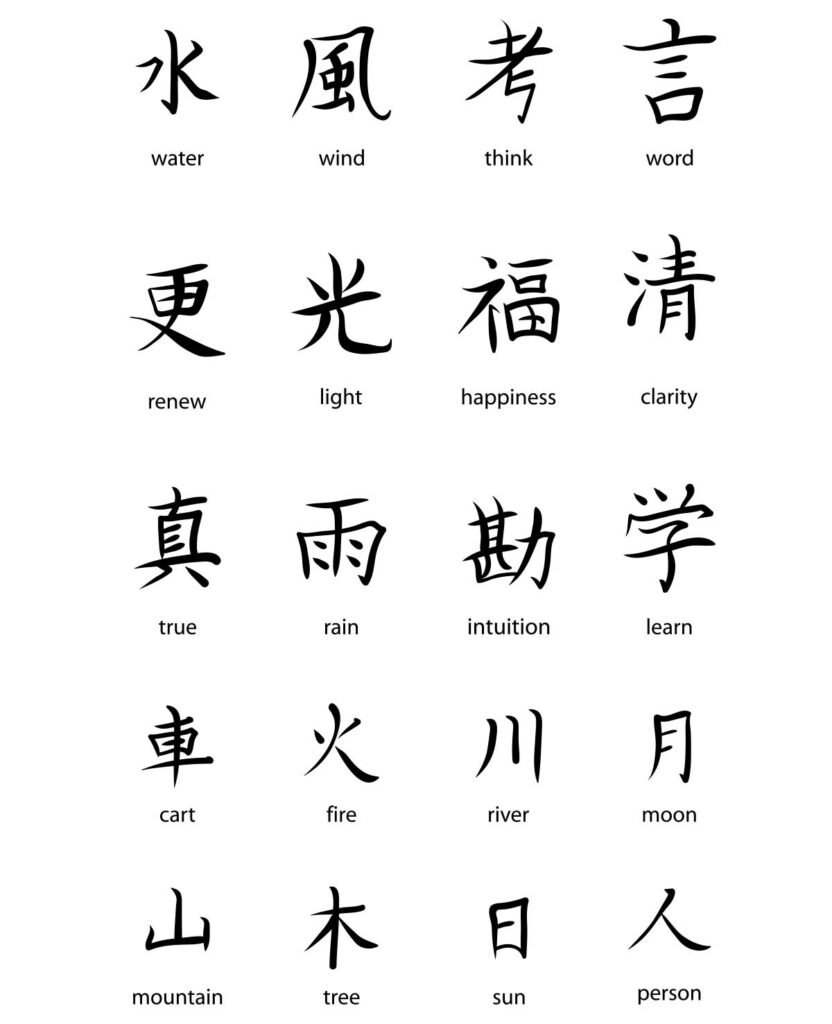
Now think about Japan. Students there gradually learn more than 2,000 commonly used kanji characters. These are not letters in a simple alphabet. Many characters have different readings, meanings, combinations, and specific stroke patterns. Yet learners build familiarity with them over time and continue using them in adult life.
Common kanji characters show how learning can grow through repeated exposure, context, and practice rather than through one enormous memorization session.
So what is the secret? It is not that Japanese students are naturally smarter, have special genes, or spend every waking hour studying. The more interesting difference is the way learning often develops through repetition, gradual progress, focused practice, and consistent review.
Many of us were never taught how memory works. We were taught what to study, but not always how to study it effectively.
People often blame students when they forget what they studied. They may be called lazy, accused of avoiding revision, or told they are procrastinating. Sometimes those things play a role, but they are not always the real reason information disappears.
Very often, the problem is not a lack of effort. It is the study method you have been using for years without questioning whether it actually helps memory.
That is what we are going to explore in this blog: science-backed and Japanese-inspired techniques that can change the way you study, remember, and review what you learn.
So, if you keep asking yourself, “Why do I forget what I study?” the answer may have less to do with the number of hours you spend studying and more to do with what your brain is being asked to do during those hours.
Why You Forget What You Study Even After Hours of Reading
Most of us were taught what to study long before anyone explained how to study.
We reread chapters, underline important sentences, copy paragraphs into cleaner notebooks, and occasionally create a small rainbow across the page with different highlighter colors. Definitions are yellow, dates are pink, examples are green, and by the end of the evening the notes look wonderfully organized.
Unfortunately, the brain is not always impressed by stationery.
There is nothing inherently wrong with rereading or highlighting. Sometimes rereading is exactly what you need when an idea has not made sense the first time. The difficulty begins when familiarity starts pretending to be knowledge.
After you have seen the same paragraph several times, it becomes easier to recognize. That familiarity feels reassuring, so you may assume you have learned the material. An exam usually asks for something more demanding. You have to explain an idea, solve a problem, construct an argument, or recall a process without the answer sitting politely in front of you.
Recognition says, “Yes, I have seen this before.”
Recall asks, “Can I produce it when the page is gone?”
That difference explains one of the most frustrating experiences in an exam hall. You look at a question and immediately know that you studied it. You can almost picture the textbook page and remember the diagram, the heading, or perhaps even the color of your highlighter. The actual answer, however, refuses to appear.
Sadly, the examiner is unlikely to award marks because you remember that the information was somewhere near the bottom of page 63.
Memory also changes with time. Hermann Ebbinghaus’s early research led to what we now call the forgetting curve. It describes a relatively fast drop in memory after learning, followed by a slower decline.
The curve does not mean every student forgets the same percentage after a fixed number of hours. It simply reminds us that information can become harder to retrieve when we do not revisit it.
The useful question, therefore, is not how to stop forgetting completely. Forgetting is part of memory. A better question is how to study in a way that makes important information easier to find again when you need it.
1. Active Recall: Make Your Brain Produce the Answer
Active recall is one of the simplest changes you can make if most of your studying currently involves looking at information again and again.
Instead of asking your brain to recognize the answer, you ask it to produce the answer.
Imagine learning to play the piano by reading about finger positions, watching tutorials, and highlighting sheet music without spending much time actually playing. You might understand a surprising amount about the instrument, but eventually your fingers have to meet the keys.
Memory has a similar requirement. Reading gives you information, while retrieval gives you practice finding that information again.
Why Active Recall Works Better Than It Feels
Research supports this distinction quite strongly. In a well-known experiment, Henry Roediger and Jeffrey Karpicke asked students to study educational passages. Some students restudied the material, while others practised recalling it.
Restudying looked useful after five minutes, but retrieval practice produced better retention after two days and one week. Interestingly, the students who restudied often felt more confident. The easier method felt better, even though it produced weaker long-term results.
That experiment captures something students experience all the time. Easy studying often feels reassuring because the information remains visible. Retrieval can feel uncomfortable because it reveals what is missing.
The discomfort is useful.
Try the Blank-Page Method
After studying a concept, close the book and put your notes aside. Take a blank sheet of paper and reconstruct what you remember in your own words.
Include the key idea, important steps, formulas, examples, diagrams, or connections between concepts. When you genuinely cannot retrieve anything else, return to the source and compare.
Suppose you are studying constitutional law and have just learned the requirements courts consider when analysing a particular legal issue. Instead of rereading the page four times, close it and reconstruct the elements from memory. Then try to explain why each one matters.
If one element disappears completely or your explanation becomes suspiciously vague halfway through, you have found the part that deserves your attention.
The blank page can be slightly rude at first. You may discover that three pages of beautifully highlighted notes have produced six lines of actual recall.
That is not wasted effort. It is diagnosis.
Rereading can hide gaps because the correct answer remains available. Recall exposes them. Once you know where the weakness is, you can stop reviewing everything equally and spend more time where learning is genuinely incomplete.
How to Use Flashcards for Active Recall
Flashcards are one of the easiest ways to practise active recall, but they only work well when you use them properly.
Read the concept, question, or hint on the front, then resist the temptation to turn the card over immediately. Give yourself enough time to produce an answer first. Once you have committed to one, check the other side and compare what you remembered with the correct answer.
Do not stop at whether you were simply right or wrong. Ask what you remembered correctly, what you missed, and what you misunderstood.
Turn Your Mistakes Into a Revision Map
Those gaps are valuable because they show you where your attention should go next. Mark the missing or incorrect parts in a different color in your notebook or textbook.
During the next review, spend more time on those weaker areas instead of reading the whole chapter with the same level of attention. Material you already know may need only a quick check, while weaker concepts deserve more time.
This makes revision more focused and gives you a clearer sense of progress. You can see what is becoming secure and what still needs work.
Quizzes can be used in the same way. Study a section, close your notes, and answer a few questions without help. Afterwards, check your responses and use the mistakes as a map for your next round of revision.
Let AI Prepare the Practice, Not Do the Learning
The good news is that students today do not have to create every flashcard, quiz, and practice question manually.
We are studying in an AI era where lecture notes, textbook sections, or your own study material can become review activities within seconds. Used carefully, AI can reduce repetitive preparation and leave more time for answering, thinking, checking, and learning.
There is one caution, though. More study tools do not automatically create better studying. If you open one tab for flashcards, another for quizzes, a third for summaries, and several AI tools for explanations, the session can gradually become a software tour.
Somewhere between tab six and tab twelve, the original chapter is still waiting patiently to be learned.
2. The Kumon Principle: Make the Work Small Enough to Start
There is another problem students frequently interpret as laziness.
You open the syllabus and see twelve chapters, three unfinished readings, two assignments, and a textbook whose thickness feels vaguely disrespectful. Before studying a single sentence, your brain has already looked at the size of the task and decided that reorganizing your desktop folders suddenly deserves immediate attention.
Sometimes procrastination begins because the task has no comfortable entry point.
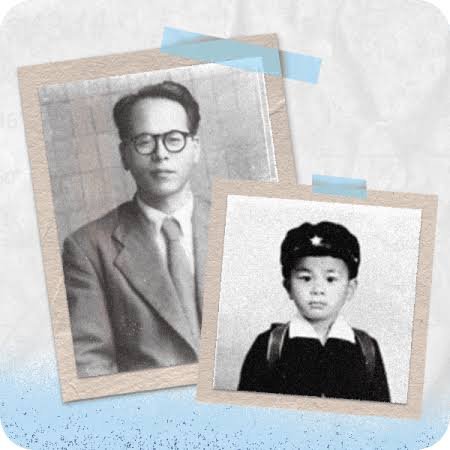
This is where an idea from the Kumon learning method becomes useful. Kumon began in Japan in 1954 when high school mathematics teacher Toru Kumon started creating mathematics worksheets for his son, Takeshi. According to Kumon’s official history, Toru developed material his son could work through independently and steadily, with manageable daily practice rather than attempting an enormous jump in difficulty.
You do not need to enrol in Kumon to borrow the underlying lesson.
“Study statistics” is not a particularly helpful instruction to give yourself. It is too broad, has no clear finish line, and gives your brain a wonderful opportunity to postpone the whole thing.
“Understand what a confidence interval represents and solve three related problems without looking at the example” is much easier to enter.
The subject has not become easier. The doorway has become smaller.
This distinction becomes especially important when you are behind. Looking at the entire syllabus every time you begin studying can make the amount of unfinished work feel larger than your ability to handle it. Breaking the work into useful conceptual targets turns a frightening quantity of material into a sequence of decisions.
You are still climbing the mountain. You have simply stopped demanding that you reach the summit before lunch.
3. Spaced Repetition: Return Before the Knowledge Becomes a Stranger
Active recall tells you what to do with information. Spaced repetition helps answer when you should return to it.
Think about watering a plant. You could pour an entire month’s supply of water into the pot on Sunday evening and congratulate yourself on being extremely efficient.
The plant may have a different opinion.
Learning works in a similar way.
Five hours spent repeatedly reviewing the same material in one night is not equivalent to meeting that material several times across a longer period. When the information is still fresh, each reread feels easier. That does not necessarily tell you whether the memory will survive once time has passed.
A 2025 meta-analysis looked at distributed practice in real classroom settings rather than relying only on laboratory experiments. The researchers reviewed more than 3,000 articles and included 22 reports covering more than 3,000 learners.
Overall, distributed practice performed better than massed practice.
How Often Should You Review What You Study?
There is no single review schedule that works perfectly for every student or every subject. You may see suggestions such as reviewing after one day, three days, seven days, and thirty days.
Those intervals can be useful as a starting point, but memory is not polite enough to follow one universal calendar.
The best timing depends on the material, how difficult you find it, how well you recalled it last time, and how close the exam is. Bring difficult material back sooner. When a concept becomes easier to retrieve, leave a longer gap before the next review.
Imagine a student preparing for a history exam on the causes of a major political revolution. On Monday, the student studies the social, economic, and political factors and reconstructs them from memory.
A few days later, the focus shifts to explaining how those causes interacted. The following week, the student answers an essay question about which factor mattered most and why.
The content returns several times, but each encounter asks slightly more from memory.
That is far more useful than rereading the same page four times on Monday evening and hoping Thursday’s brain receives the message.
Spacing and retrieval work particularly well together because they solve different parts of the problem. Spacing creates time between encounters, while retrieval makes your brain work when you return.
4. Kaizen: Improve Your Study Routine Without Reinventing Yourself
Students occasionally design study routines for a person who does not exist.
This imaginary student wakes at 5 a.m., exercises, meditates, finishes every assignment early, and reviews every flashcard on schedule. Somehow, this remarkable person also never checks social media while studying and apparently experiences no inconvenient emotions whatsoever.
Then Tuesday arrives and the real student has to operate the plan.
Kaizen, a Japanese idea commonly associated with continuous improvement, offers a more realistic philosophy. Instead of waiting for a dramatic transformation, you improve the process gradually enough that the improvement can survive ordinary life.
Build a Study Routine You Can Actually Continue
For studying, kaizen can be surprisingly practical. You might replace part of a rereading session with retrieval practice or review yesterday’s material before starting something new.
Another option is to complete three thoughtful practice problems instead of racing through fifteen without learning from the mistakes. Even making your daily study target more specific can reduce the resistance to starting.
The changes are small, but that is partly why they can last.
There is a slightly philosophical problem hidden here. We tend to respect progress more when it looks dramatic. A six-hour study marathon feels important because it is exhausting and visible, while thirty focused minutes repeated across several days feels almost too ordinary to celebrate.
Memory does not care much about theatrical effort.
On a genuinely busy day, your minimum routine might be ten minutes rather than two hours. You could spend the first few minutes recalling something from your previous session, use the middle of the time to review a difficult concept, and finish by solving one question without help.
Ten minutes will not replace serious preparation for a final exam. Its purpose is to stop one difficult day from quietly becoming five days of avoidance.
The goal is not to make studying tiny forever. It is to make returning easier.
5. Shūchū: Give Your Attention Somewhere to Stay
A good study method still needs attention.
You can have excellent flashcards, a carefully spaced revision plan, and beautifully divided learning targets. But if your attention keeps moving between the textbook, notifications, messages, browser tabs, and whatever video is playing in the background, those methods never receive your full effort.
The Japanese word shūchū refers to concentration or focused attention. For students, the useful idea is not complicated: create conditions in which the task you chose has a reasonable chance of keeping your attention.
Research on smartphone presence is mixed, so claims such as “your phone destroys your memory even when it is switched off” go further than the evidence.
One 2023 experiment found lower attention performance when participants completed concentration tasks with their phones nearby. Other studies have produced more mixed results, which is a useful reminder that attention research rarely fits neatly into a motivational poster.
Create an Environment That Protects Your Focus
For studying, the practical conclusion is simple. If your phone regularly competes for your attention, place it somewhere that takes a deliberate effort to reach.
You do not need to treat the phone as an enemy. Simply make distraction a little less convenient.
The same principle applies to your browser and desktop. Close tabs that do not belong to the task, keep the material you actually need visible, and decide what you want to finish before the session begins.
A quieter digital environment gives your attention fewer places to escape.
You also do not need an elaborate study ritual involving three candles, expensive headphones, special tea, and rainfall sounds recorded somewhere in Kyoto.
Choose one clear task before you begin. Keep only the material you need visible, close unrelated tabs, and make distractions slightly harder to reach.
A short closing ritual can be equally useful. Before ending the session, ask yourself what you can now explain without notes, where you struggled, and what should return in the next review.
That small reflection changes the measure of studying from “How long was I sitting here?” to “What can I actually do now?”
Four distracted hours are not automatically more valuable than one focused hour. Time matters, but attention decides what much of that time becomes.
How the Five Study Techniques Work Together
These techniques are more useful as a system than as five separate tricks collected from the internet.
Begin with one manageable part of the subject instead of attacking an entire chapter. Give the concept enough attention to understand it, then remove the source and retrieve what you can.
Compare your answer with the original material and repair the gaps. Later, return to the idea after enough time has passed for remembering it to require some effort.
On the following day, add another small piece while older material moves through spaced review. As the weeks pass, the process becomes more efficient because you begin noticing patterns in your own learning.
You learn which questions expose your weaknesses, which material needs shorter review intervals, and which distractions repeatedly steal your attention.
That is active recall, spacing, small-step learning, continuous improvement, and concentration working as one learning process.
More importantly, it changes the question you ask yourself after studying. Instead of measuring success only through pages read or hours spent, you begin asking whether you can explain, apply, or reconstruct the knowledge when the support disappears.
That question is less comforting.
It is also much closer to what an exam eventually asks.
What If You Are Already Behind?
When the exam is close and half the syllabus still appears to be waiting for your attention, the natural reaction is to treat everything as equally urgent.
Panic is very good at doing that.
Unfortunately, panic makes a task feel larger without providing any useful information about where your time should go.
Start with the concepts that matter most or support other parts of the course. Before rereading them, test yourself.
Some areas may be stronger than you expected, while others may be held together mainly by familiarity.
That distinction gives you something valuable when time is limited: priority.
Instead of spending two hours reviewing everything from the beginning, direct more of that time toward the concepts you cannot retrieve, explain, or apply.
This is one reason effective studying is not simply about working harder. It is about learning enough about your own knowledge to decide where the next hour will matter most.
How AI Can Help You Remember What You Study
Students today have access to something previous generations did not: technology can remove much of the repetitive work involved in preparing material for practice.
That is useful, but only if we give AI the right job.
A learning partner such as Conch AI can organize difficult information, simplify explanations, create self-test questions, and turn study material into easier review formats.
The important distinction is simple: technology prepares the practice, but the student still performs the remembering.
Use AI to Create Practice, Not Just More Content
Imagine you have finished reading a difficult section of a political science text.
Instead of asking AI for another summary, ask it to create five questions about the causes, relationships, exceptions, and applications in that section. Then close the source and answer the questions yourself.
Only afterwards should you compare your responses with the original material.
The same principle applies to flashcards, quizzes, diagrams, and simpler explanations. AI becomes useful when it reduces the friction around learning rather than replacing the learning itself.
There is one caution worth keeping in mind. Finding the perfect study tool can become an impressive form of procrastination.
If fifteen AI tabs are open because one creates quizzes, another makes flashcards, and a third produces summaries, we may have solved the wrong problem.
Choose a workflow, use the technology where it saves effort, and then give your own brain something to do.
Conch’s role should be to help students understand, organize, practise, and communicate knowledge more effectively. The student’s role remains equally important: check the material, think about it, retrieve it, and decide whether it actually makes sense.
Before Your Next Study Session
You do not need to rebuild your entire study life tonight.
Take one topic you were already planning to study and change the way you approach it. Break the material into something manageable and learn it with your attention actually present.
Then close the source and reconstruct what you understood. Check the gaps honestly and decide when you will review the material again, rather than leaving that decision to the night before the exam.
If you repeat that process, something gradually changes. Studying becomes less about how much information passed in front of your eyes and more about how much knowledge remains available when the page disappears.
That may be the better question to ask when you close your book at the end of the evening.
Not simply, “How long did I study?”
Ask yourself, “If I had to explain this now without looking, what would still be mine?”
Your brain does not need another reason to see the information.
It needs enough reasons to use it.
Leave a Reply